Every week, a new headline claims AI will steal your job, wreck the economy, or drain the world’s water supply. The panic is loud—and loud on purpose.
Tech leaders and vendors benefit when marketers feel overwhelmed, confused, and desperate to “keep up.”
According to Sarah Stockdale, CEO and founder of Growclass, fear is a product being sold to us:
“Anytime you see a media storm about something that makes you panic, someone is orchestrating it. Someone is benefiting from that anxiety.”
- Sarah
At the recent Growclass AI Summit, Sarah kicked off the day with a simple invitation:
Stop doom-scrolling, and start asking better questions.
Instead of letting tech bros convince us that robots are taking over, what if we learned how these tools actually work—and used them to support the creative, strategic, deeply human parts of our jobs?
Let’s get into the key takeaways from Sarah’s talk on how to decipher what’s actually helpful when it comes to using AI for marketing.
The AI anxiety trap: Who profits from your fear?
Sarah started her talk with a reality check: the anxiety so many marketers feel around AI isn’t a personal failing. It’s not because you’re behind or missing something. It’s because fear is being sold to you. And that’s done intentionally.
She pointed out how AI headlines often land everywhere at once, all shouting the same message—AI will take every job, AI will destroy everything. That doesn’t happen by accident.
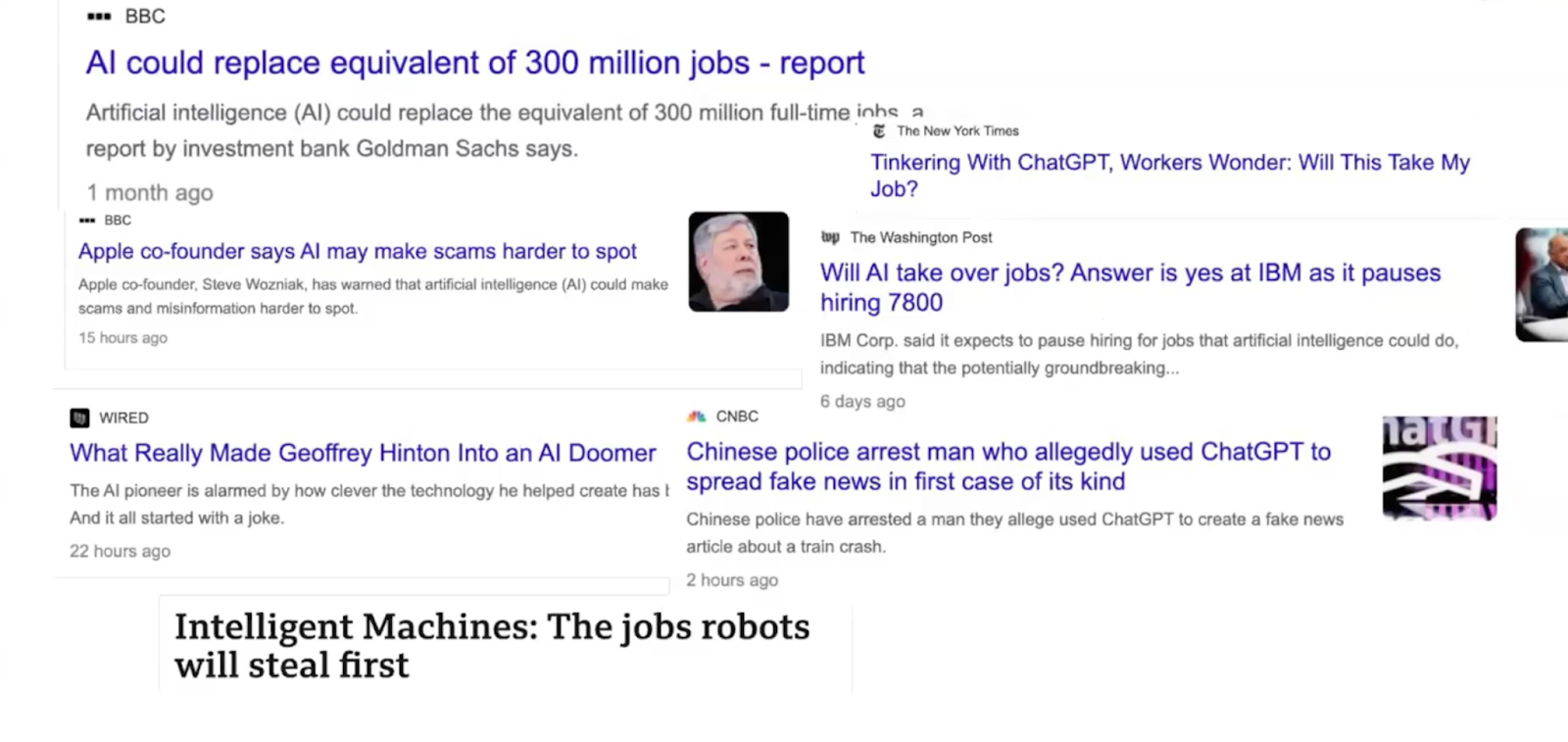
These headlines serve a purpose: make you feel vulnerable. Make you believe you need to buy something to stay safe.
“Someone is benefiting from that anxiety. And so anytime I see a whole bunch of information come out about a topic that my knee-jerk reaction is to feel scared. I always ask: who benefits from that fear? Because there are always people who are trying to make us feel anxiety and fear. And there's always a reason. There's always an intention behind creating that anxiety and fear.”
- Sarah
Because once fear kicks in, we behave differently. We’re less likely to question whether a new AI tool is actually useful for our work. We’re more likely to say yes quickly, to adopt tech we don’t understand, and to spend money to keep up. We make decisions to protect ourselves rather than improve our strategy.
And the people pushing that narrative are the ones who benefit most from marketers chasing AI out of panic, not purpose. Recognizing the fear trap is the first step. The second is refusing to stay in it.

From fear to curiosity: The mindset shift for leaders
Fear doesn’t just make marketers easier to upsell. It also shuts down the part of our brain we need most in a changing industry: the part that learns.
Sarah explained that when we feel anxious or threatened, our ability to absorb new information drops dramatically
“When you're scared, the part of your brain that's responsible for learning something new completely closes. It shuts off the part of your brain that allows us to make new neural pathways, you're definitely more likely to consume, but you're not likely to take in any new information.”
- Sarah
In other words, when panic takes over, we stop experimenting and start catastrophizing. We cling to survival instead of growth. That’s exactly what the hype machine is betting on.
Curiosity, however, does the opposite. It puts us back upstairs in the “house,” as Sarah described it, where learning and creative problem-solving happen. Curiosity invites us to question AI instead of fearing it. It encourages us to get more informed, not more overwhelmed.
So before diving into new tools, Sarah encouraged marketing leaders to ask different, better questions:
- What is this tool actually doing?
- Is this a real solution or a shiny demo?
- Who is telling me to be scared, and why?
AI changes fast, but our power comes from staying curious—not getting swept up in worst-case scenarios.
How generative AI actually works (It’s just word math)
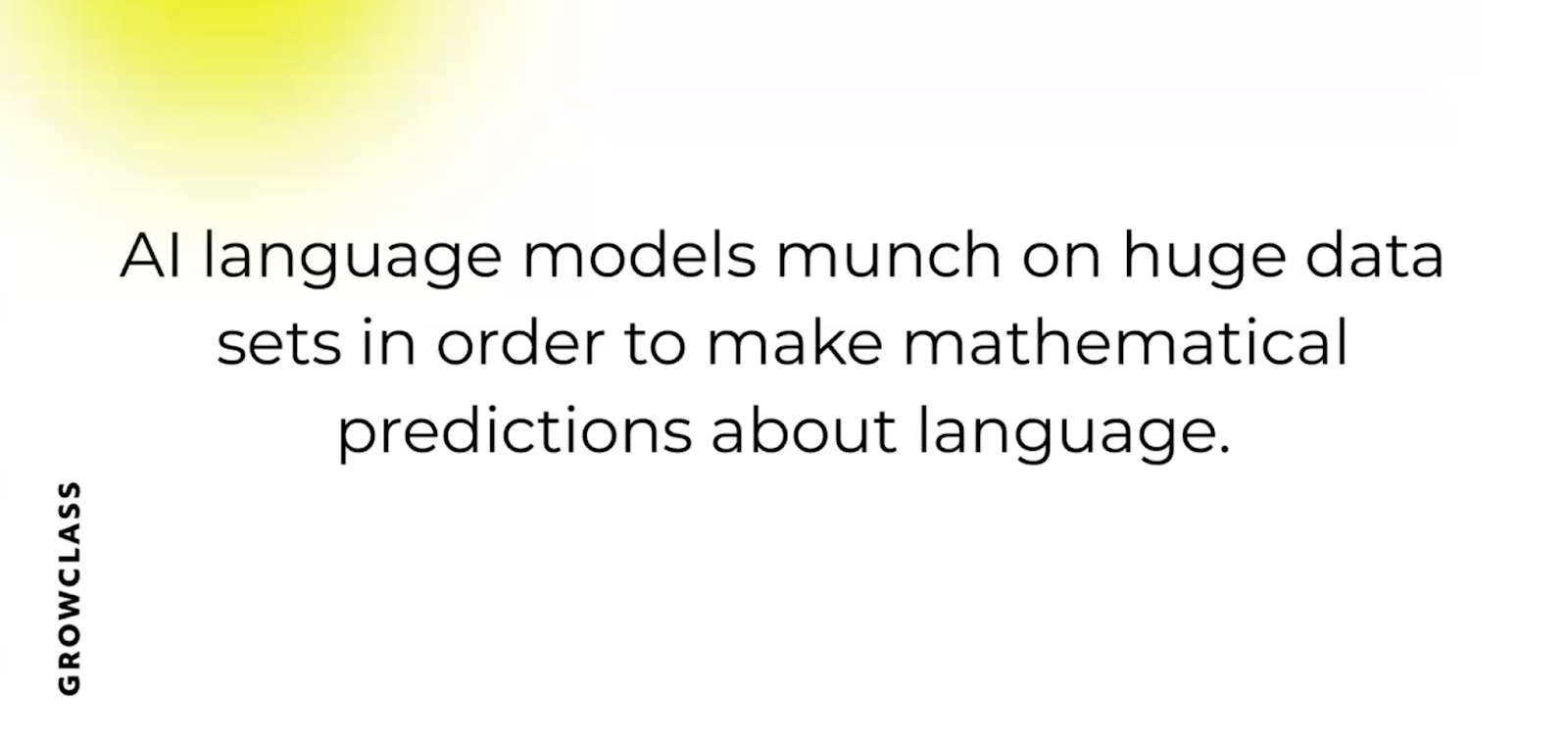
A big part of releasing AI anxiety is understanding what these tools actually do. Despite the magic-show presentation, they are not thinking, strategizing, or creating original ideas. They are doing math.
Sarah walked through how large language models like GPT work: they break down everything you type into numerical tokens, then predict the next most likely token based on patterns they’ve learned.
This means LLMs excel at things where patterns already exist, such as:
- Rephrasing
- Summarizing
- Following established formats
But they aren’t a replacement for specialized decision-making, emotional intelligence, or creative insight. Since the models are trained on huge amounts of scraped human language, they can mimic expertise convincingly without understanding any of it. And because their goal is to please the user, not challenge the accuracy or logic, they can be confidently wrong.
That’s why Sarah warns against relying on AI for sensitive or high-stakes advice:
“It’s predicting the next most likely word in a sentence. It is not offering you insight. It is not offering you therapy. It is not strategizing for your business. It is predicting the next most likely word in a sentence. So, when you know that that is how these models work, should you ask it for healthcare advice? No, you should definitely not do that.”
- Sarah
💡 Sarah’s pro tip: Treat AI like a prediction engine, not a strategist. It can support the work you already know how to do, but it cannot think for you.
“Can vs. should”: A filter for every AI use case
One of the most important mindset shifts Sarah offered is separating what AI can do from what it should do. Because technically, a lot is possible—but that doesn’t make it a good idea.
She shared a familiar hype-post example: someone proudly announcing that their newsletter now writes and sends itself using a complex AI “agentic flow.”
Sure, that setup is technically achievable. But Sarah has two big questions:
1️⃣ Will it be any good?
2️⃣ Will it actually work consistently?
“Setting up agentic flows like this is really difficult, and they break constantly. You have to give them access to tons of data without really good guardrails on how it's going to use it. And they break.”
- Sarah
Even if the system manages to send emails reliably, the content itself becomes the next problem. If no human ever reviews it, you’re not sending a message—you’re sending slop.

Email is one of the most valuable channels marketers have. There’s no algorithm between you and your audience. Trust is built there. Which is exactly why automating communication without oversight is so risky.
As Sarah explained, if you teach people that your emails will be generic and forgettable, they’ll stop opening them or unsubscribe altogether. And when that happens, you lose direct access to your customers entirely.
So the question for you isn’t “Can AI automate this?” It’s:
- Does this channel rely on connection, nuance, or credibility?
- Will this choice make our audience trust us more or less?
- Is automation making us faster or just noisier?
What should marketers use AI for?
Once you understand that AI is basically a prediction engine, its strengths become much clearer. The key advantage? AI tools are great at taking on the repetitive pattern-based work that slows you down.
“These tools can't think and lead, but they can remix patterns of things you've built in the past.”
– Sarah
What AI is great at 💪
- Drafting first versions of copy based on strong examples
- Polishing language for clarity and tone
- Re-packaging existing content across channels
- Handling busywork that doesn’t require original insight
Where AI struggles 👎
- Creating anything truly new
- Understanding your customers’ values and context
- Making judgment calls or strategic decisions
- Building trust or an emotional connection with your audience
Sarah emphasized that the best results come when you already know what great looks like. AI can help you get there faster, but your expertise still does the real quality control.
🔍 By the way, if you’re curious about how AI is reshaping Google search results and what to do about it, check out our recap of Tiffany DaSilva’s talk on SEO in the age of AI.
Custom AI helpers trained on your own IP
So if “fully automated everything” isn’t the goal, what is?
Sarah’s answer: build AI tools that amplify your own expertise instead of replacing it.
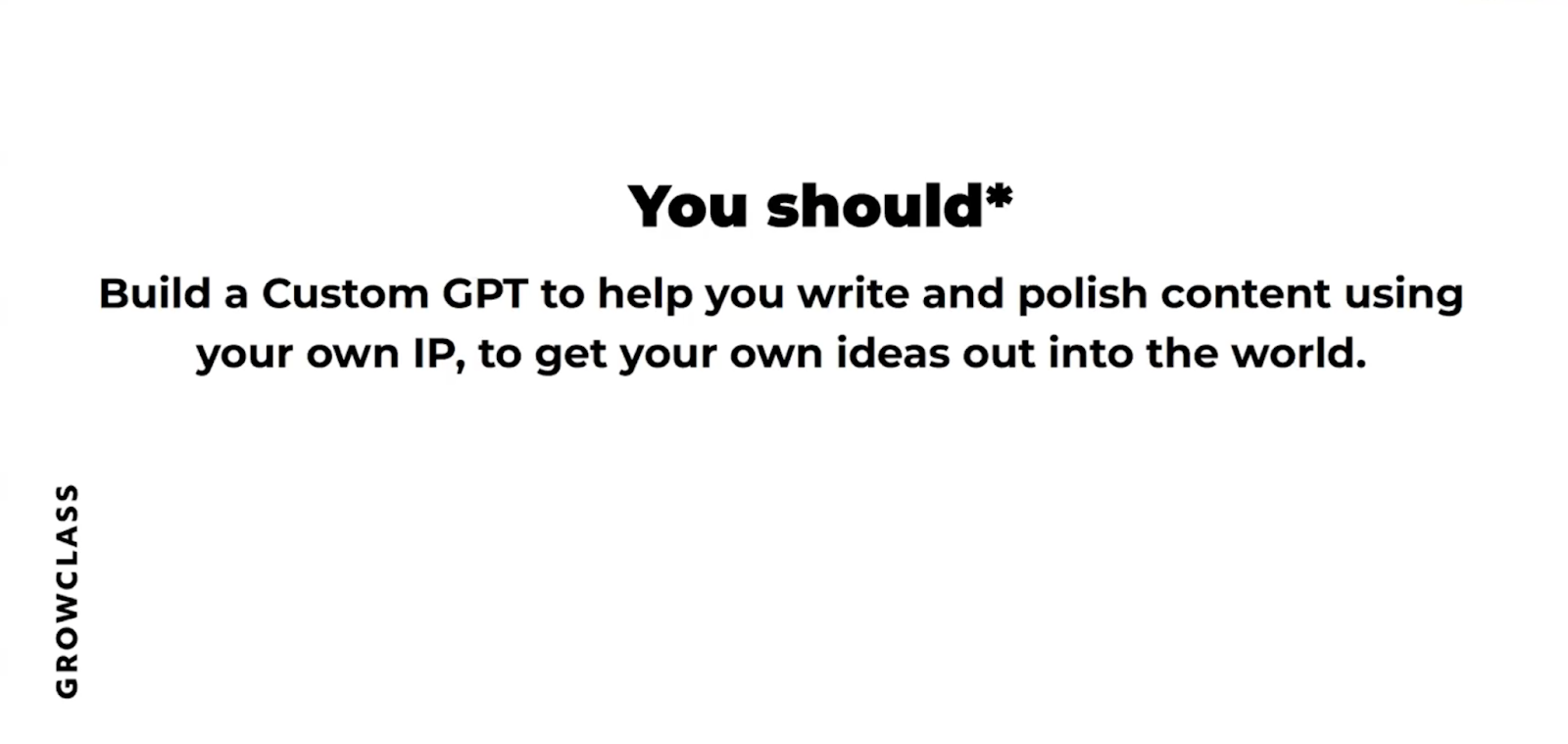
Sarah explained how, with a paid version of ChatGPT, you can create a Custom GPT trained on:
- Your highest-performing emails and posts
- Brand guidelines and tone rules
- Customer objections and how you handle them
- Templates and examples that already convert
“You need to give it everything it needs to create something great. Otherwise, it's just pulling from all of the patterns in all of its training data, and not necessarily what you are looking for in terms of good work.”
- Sarah
With that setup, AI becomes your collaborator. It drafts quickly based on what has worked before, and you (the human editor) still decide what makes it out into the world.
One advantage Sarah highlighted? Your intellectual property stays yours.
You’re not relying on scraped content or hoping the model magically understands your voice. You’re feeding it your own expertise (and using AI to scale what you already do well).
Your creativity is still the competitive edge
Sarah leaves us with one very clear warning: AI doesn’t reward shortcuts.
Those “30 AI blogs a month” hacks might look flashy on LinkedIn, but unoriginal content gets ignored by audiences and penalized in search. If it doesn’t solve a real problem for someone… Why publish it?
AI is powerful at predicting patterns in language, but it can’t care about your customers, tell stories from lived experience, or make bold, creative calls. It relies on human ideas to get better. In Sarah’s words, these tools “need us to live.” Your creativity, judgment, and values are still what set your marketing apart. And you should continue to lean on them
If you want to keep exploring how to work smarter with AI, check out the Growclass AI Guide or join our AI Marketing Strategy Certification and learn alongside a wonderful community of curious marketers.