
People don't build community by logging into a webinar. They build it by feeling seen. Here are four lessons we learned from hosting Proofed on how thoughtful design, messy human moments, and a lively chat can turn an online event into a space people actually want to be part of.
Did you attend a bunch of online conferences during COVID in the hopes of connecting and *feeling* something like me?
I craved connection and community, but rarely felt like part of the experience— more like my attendance was simply bolted onto the existing structure and didn't add anything to others’ experiences.
Being a part of an online community doesn’t happen because people log in.
And that’s what I’ve learned and loved about Growclass since joining the team. (And the whole theme of this note to you.)
People can register. They can log on. They can technically be *in the room.* But that does not automatically mean they feel connected, invited in, or part of something.
Especially online.
Especially at scale.
And for anyone building learning experiences, events, workforce development programs, community programming, digital skills training, or simply trying to create a sense of community amongst all the muck we trudge through to find a connection, that distinction really matters.
Because the goal is not just to get people to attend.
The goal is to create enough trust, energy, and participation that people feel confident engaging. To ask questions. To share what is resonating. To admit what feels confusing. To keep going after the session ends.
That mindfulness of interaction has to be designed for the community to sprout.
We saw this play out in a very real way during Proofed earlier this month–Growclass’s full-day online summer festival on what is changing across AI, search, content, and digital marketing. I will share more on that in a minute, but first, here are the 4 biggest lessons of practicing community building.
1. The chat *is* the room.
In online spaces, the chat is where so much of the community actually happens.
It is where people nod along. It is where they say “same.” It is where they ask the question they might not want to ask out loud. It is where they laugh, react, clarify, encourage, and realize they are not the only person trying to figure something out.
Being human in a room is not just about receiving information. It is about feeling seen, heard, understood, and like your point of view and presence are valued.
And when we move that “room” online…that gets trickier.
When you cannot see someone’s eyes, notice their body language or catch the moment when a point really lands, you have to create other ways for people to feel witnessed.
That is where the chat becomes the room
The chat is a feedback loop, a pulse check, a way for people to say, “I’m here,” “I’m with you,” “I’m wondering that too,” or “this is landing for me.”
So when we design online events or learning experiences at Growclass, we do not treat the chat like an extra thing happening off to the side.
It is part of the plan.
That means someone needs to be actively holding that space. Welcoming people. Responding to comments. Pulling out great questions. Reflecting back on themes. Making people feel noticed, not that their contributions disappear into the scroll.
This is especially important when the topic is something like AI, where people are often coming in with a mix of curiosity, pressure, excitement, and “am I already behind?” energy.
Sometimes the most valuable thing you can do is help people see that other people are asking the same questions, too. (And shoutout to Hannah, Karli, Brea, Bella, Juan and Sarah from the team for doing *exactly* that!)
2. Human beats polished.
The best online spaces feel like real humans gathering around something useful. No one wants to be talked *at.*
That means an experience that leaves room for warmth, humour, responsiveness, and the occasional imperfect moment.
So that even when something does not go as planned, it’s not as sloppy, but embraced as part of the human element. The truth is, the tech will not always cooperate. (And it didn’t!)
Someone will have to troubleshoot something (like when DJ Hans Solo could no longer share music 🤪). A transition might be slightly awkward (like when presenters’ own tech delays cameras turning on, or even joining the event 🫠). A platform feature you were counting on might suddenly be unavailable (like being used to Zoom meetings and not webinars, so being thrown a loop when things don’t work the same 🙃).
In those moments, pretending everything is seamless usually makes things feel more awkward.
Naming it, laughing a little, and bringing people in on the joke often builds trust faster than trying to perform perfection.
People do not need everything to be flawless. And thank goodness, because perfection isn’t interesting!
3. The tech can shape the community. But the community is bigger than the tech.
A small but very real example: Zoom webinars not allowing emoji reactions to individual chat comments absolutely foiled us.
And yes, that sounds tiny.
But I swear it is not!!
Emoji reactions are a way for people to say “yes,” “same,” “I see you,” “that made me laugh,” or “I’m with you” without interrupting the flow of the session. (There is full-on Growclass lore about the 🦀 🍑and 🐺emojis, but more on that in another email!)
They are tiny signals of belonging.
So when people couldn’t react directly to each other’s comments, they did the next best thing: they brought the reactions into the chat itself.
Not elegant. Very effective. Deeply Growclass.
And honestly, that was the real lesson.
The tools matter, yes. They can make connections easier or harder. But community is not created by the platform. It is created by people feeling safe enough, invited enough, and excited enough to reach for each other anyway.
4. Breaks give breath.
This one sounds obvious, but it came up in the feedback, too.
Online learning demands a lot from people’s attention, especially during a full-day event.
So the pacing matters. The breaks matter. The ability to be off-camera matters.
The space to absorb, stretch, refill your coffee, answer a message, or just not be perceived for a few minutes matters.
Sometimes we talk about engagement like it means constant activity, but part of designing a good online experience is knowing when to give people breathing room.
That is what helps them stay with you for the long haul!
We saw all of this at Proofed.
On June 11, nearly 500 people joined us online for Proofed, our full-day conference on AI, search, content, and digital marketing.
And somehow, it still felt warm, energetic, and personal.
Not because the tech was perfect. (It was not. See above 😅)
But because the experience was designed around people first.
We had 475 total guests, 1,586 messages in the chat, and a 4.7/5 overall rating.
The numbers only tell part of the story. What felt more important was the energy in the room.
People were asking questions. Sharing what resonated. Cheering on speakers. Admitting what felt confusing. Making each other laugh. Naming their own experiences in real time.
And because we love a little *proof* (see what I did there?), I wanted to share a few pieces of feedback from the post-event survey:
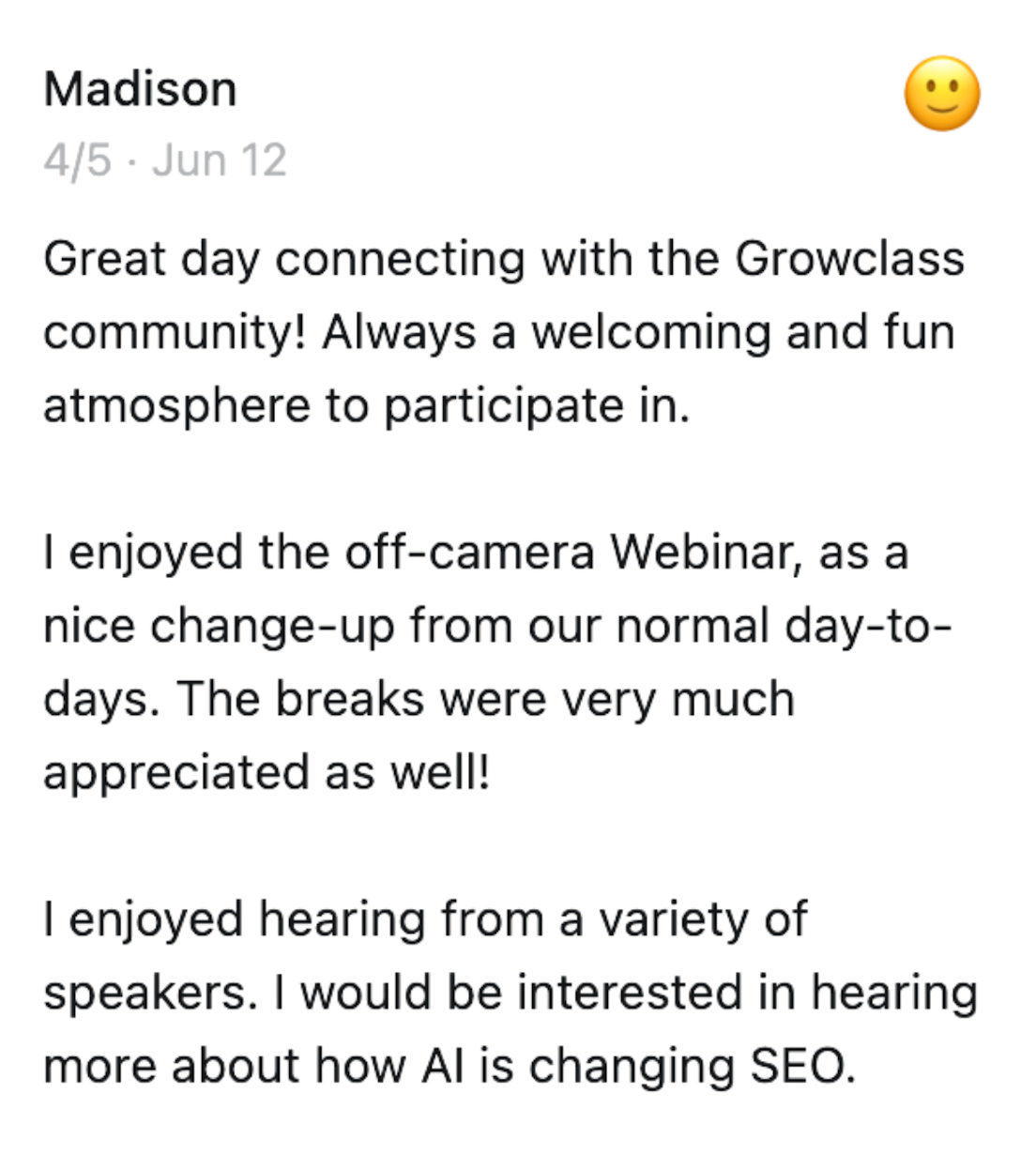
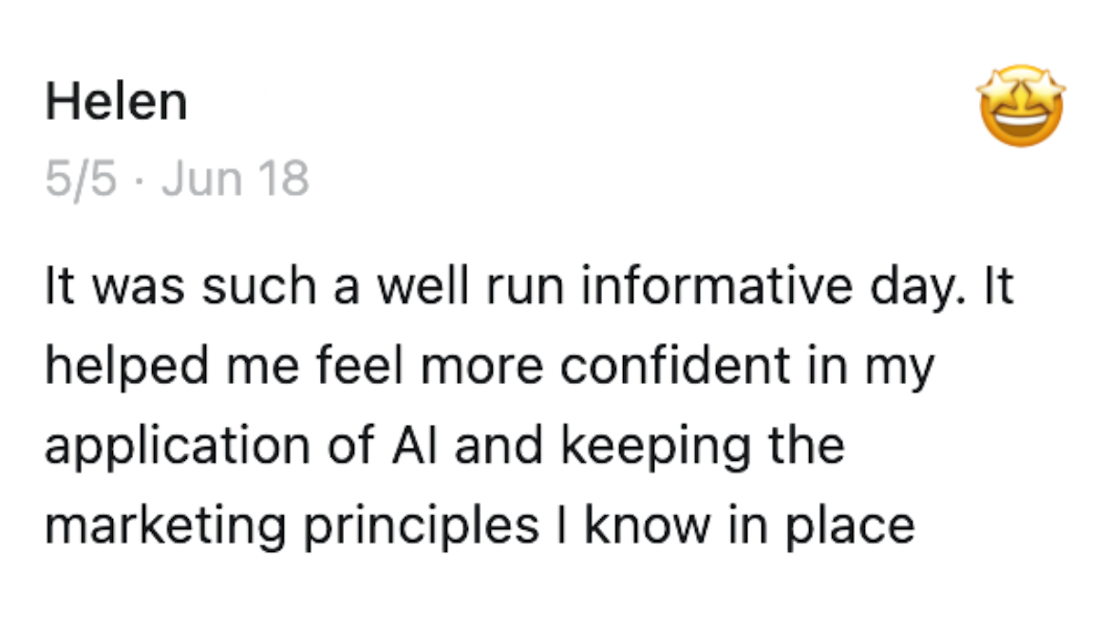
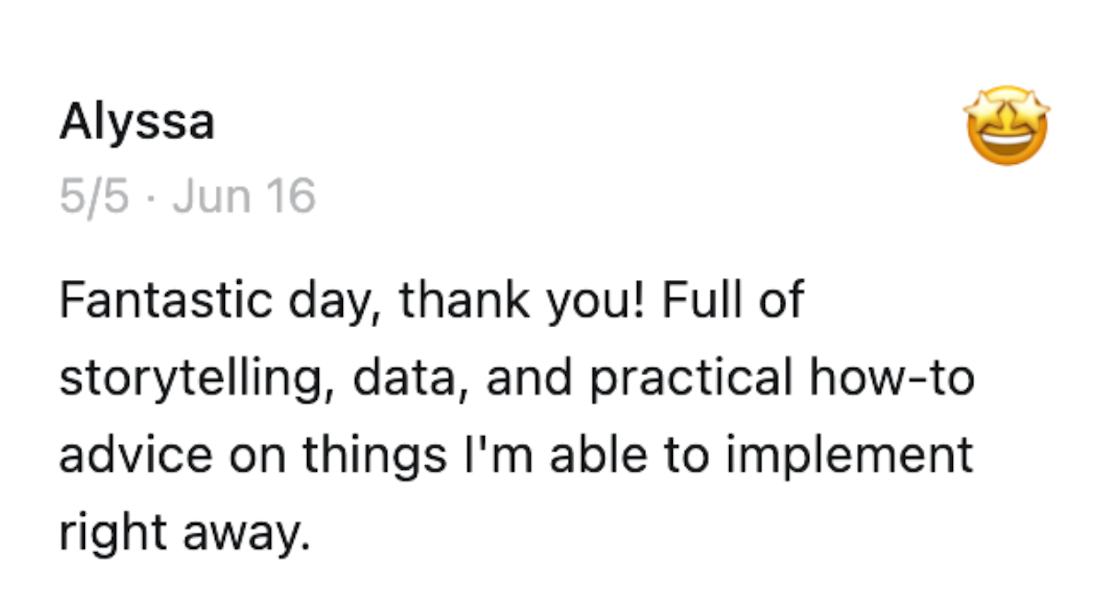
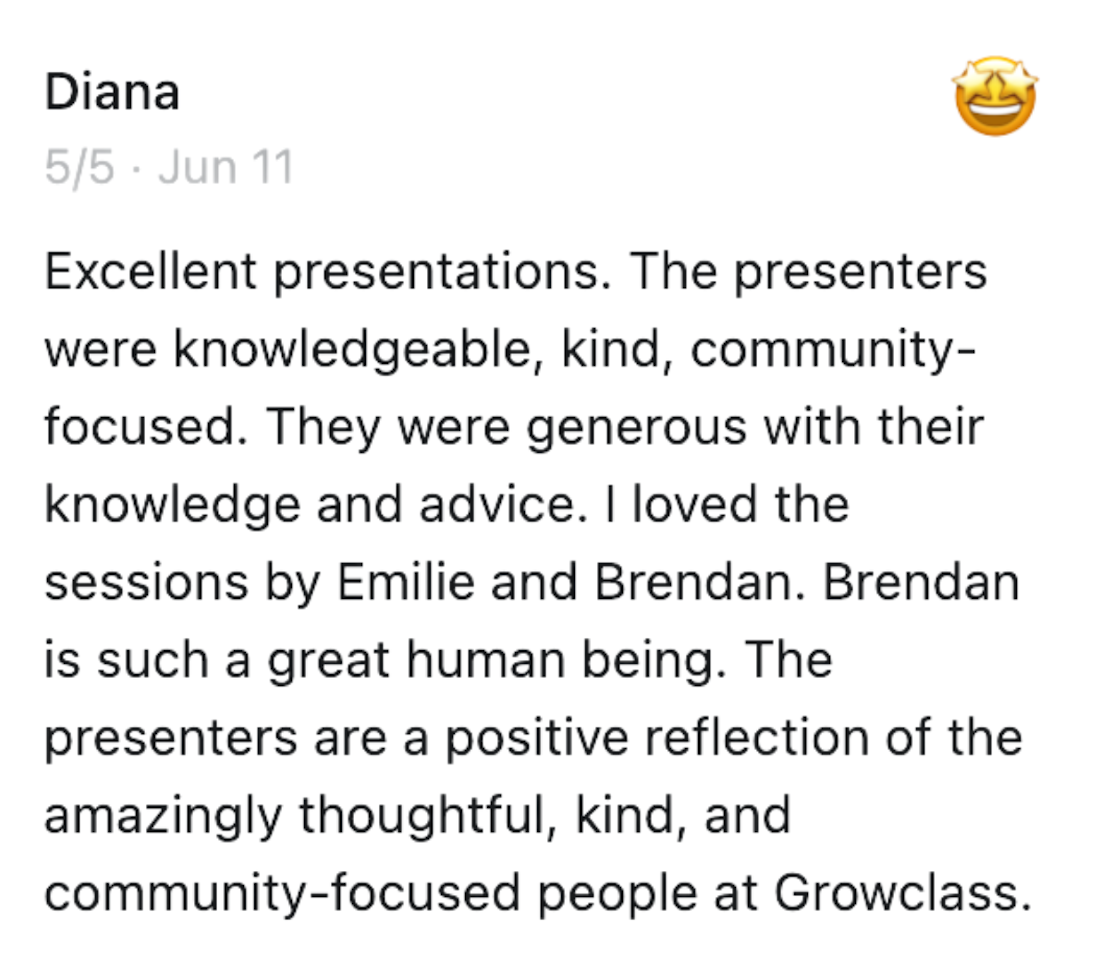
That term–community-focused–is the thing I feel most proud of, because while Proofed was a conference about AI, search, and digital marketing, underneath that, it was also about helping people feel less alone in a moment where a lot of people are trying to make sense of big changes in their work.
So… why should you care?
For any organization thinking about workforce development, women in business, digital skills training, entrepreneurship, marketing education, AI adoption, or community-based learning, this is the piece I would underline:
Belonging is not a nice-to-have. It affects whether people stay long enough to learn and come back.
We measure impact not only by how many people register, but also how much people feel connected and participate, how confident they feel to ask questions, and how supported they feel to keep going to apply what they learned afterward.
That is why we care so much about the experience around the content and creating community, no matter the platform.
Because a webinar can technically deliver information and still leave people feeling alone. And a conference can have brilliant speakers and still feel cold. And a training session can check every box and still not create the kind of confidence people need to actually use what they learned.
At Growclass, we are always trying to build the other thing. The thing where people come for the topic, but stay because they feel like the room was built with them in mind.
Until next time… waving,
Talitha

.png)
