Hey,
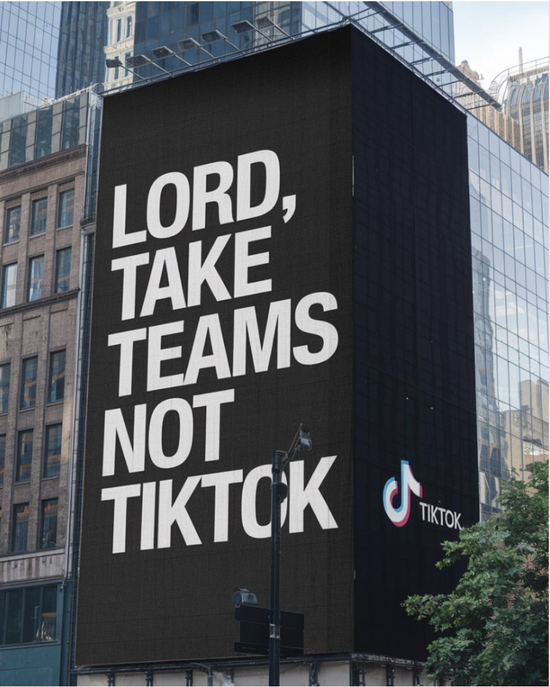
TikTok refugees.
Xiaohongshu.
Americans learning Mandarin.
If you have no idea what any of this means, let me catch you up on the events from the last few weeks.
The tl;dr is that TikTok was set to be banned in the United States on January 19th, causing users to dub themselves "TikTok Refugees" and leave the app for its Chinese equivalent Xiaohongshu—more commonly referred to in North America as RedNote.
Media (and the internet) lost their minds over this.
The significance boils down to understanding why the United States plans to ban TikTok to begin with.
The government claims that the app, owned by a Chinese parent company, poses a national security threat, citing concerns about the potential sharing of private user data with the Chinese government. Concerns about its influence on public opinion within the US have also been raised.
For many TikTok users, the platform is a vital source of news and information that may not otherwise reach them. For some content creators, it’s their main source of income. Some businesses have achieved significant growth through TikTok, relying heavily on it to market their products and services.
While TikTok is still available, American creators are using their final days on the app to send a very clear message to their government: if they restrict access to apps because of perceived data threats, they’ll willingly give their data to China by migrating to RedNote—and they’re urging their followers to do the same.
And it’s working.
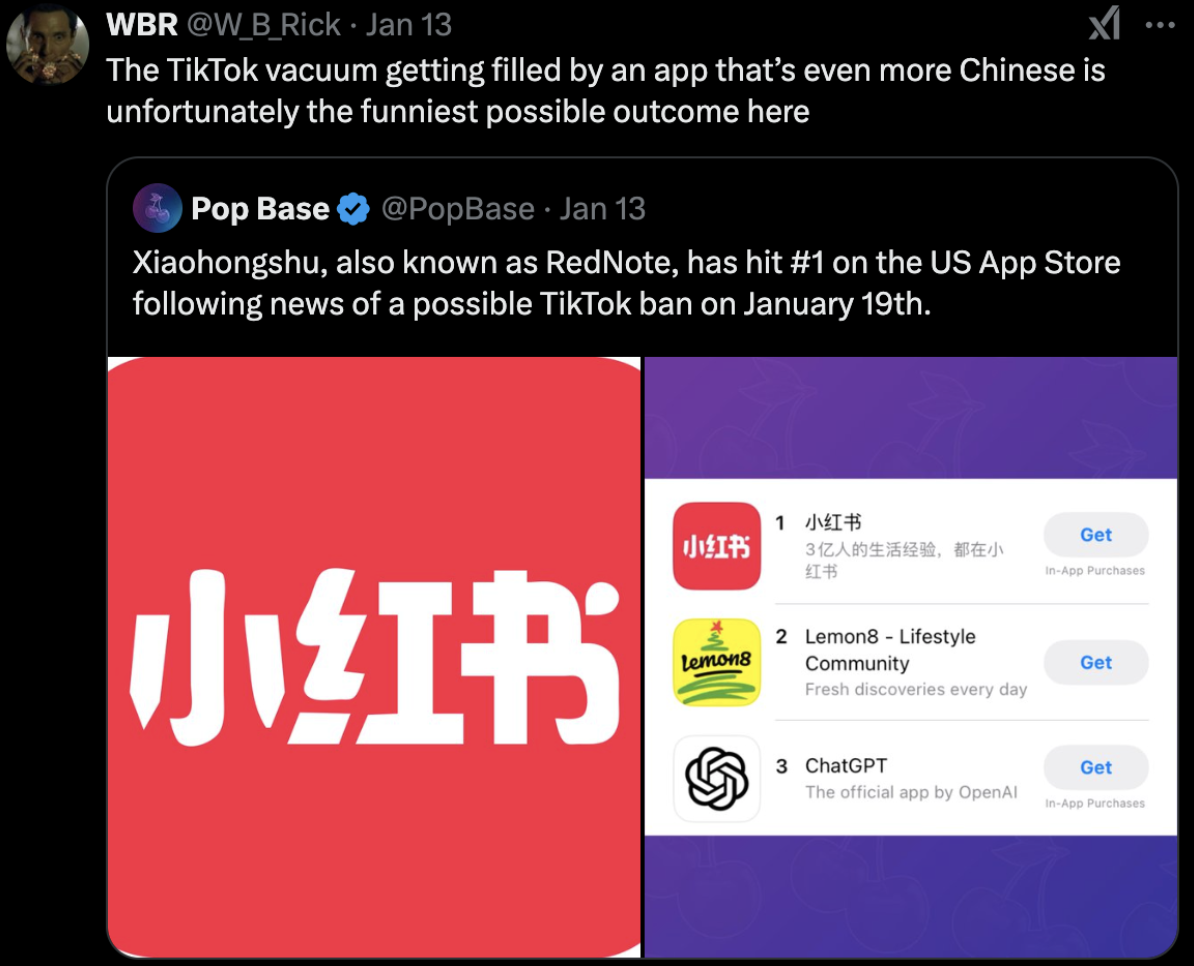
A few weeks ago RedNote was virtually unknown outside of China. Last week was a very different story. In just a few days, the app has gained over half a million new users, shooting to the very top of the US App Store.
While much could be said here about the history of Chinese-American relations or the digital geopolitics of this migration, something else is going on here that we’ve never really seen before.
Something… adorable?
We're witnessing the unfolding of a deeply wholesome case study in building community.
The virtual side of China has largely been shrouded in mystery because of its strict internet censorship policy—aka the Great Firewall. The social media platforms we're familiar with in North America, like TikTok, Instagram, and X, are all blocked there. Instead, they've built their own internet along with social media apps like WeChat, Douyin, Sina Weibo, and of course, RedNote.
That means that this app migration marks the first real exchange between many Chinese and American users, and they're greeting each other with what appears to be genuine warmth and curiosity.
Both sides seem visibly excited about learning to understand each other better.
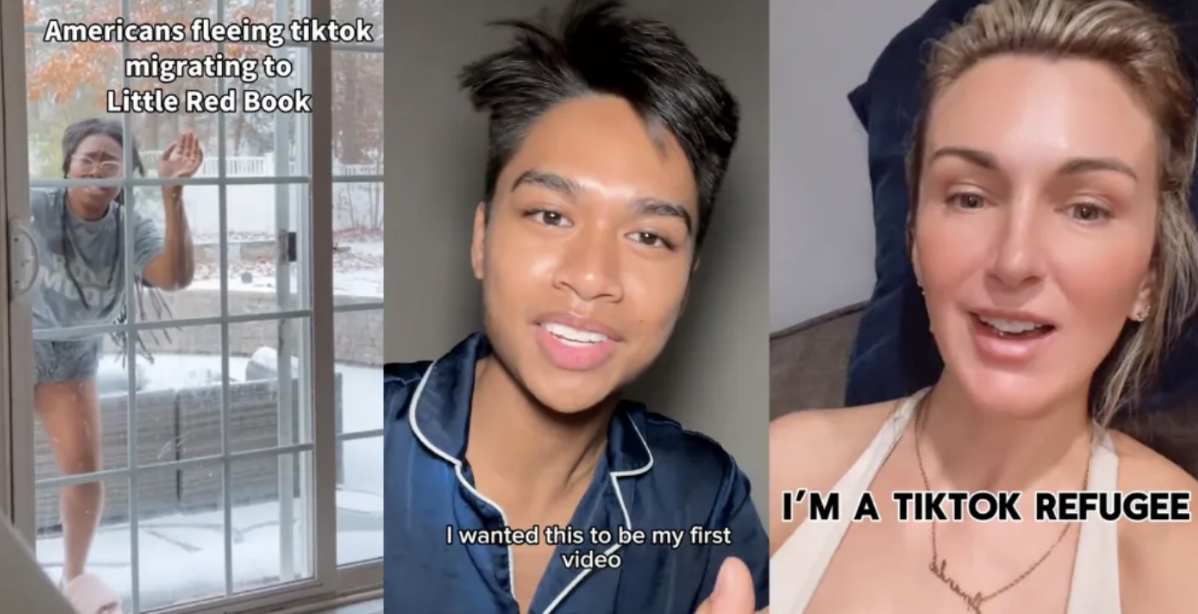
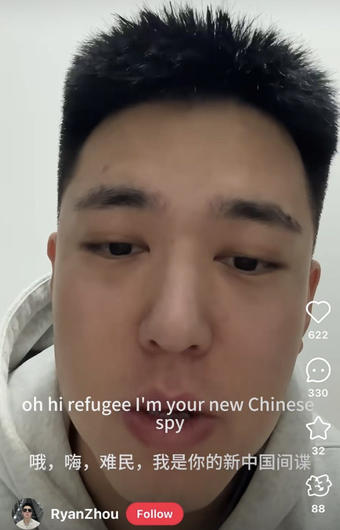
Within just a few days, Americans are using the app to learn Mandarin, while Chinese users are getting in on the memes and inside jokes that defined TikTok. (For example, TikTokers have recently been posting satirical goodbye videos to the fictional 'Chinese Spy' assigned to monitor their TikTok use.)
If the defining markers of a successful community are shared values, interests, and active participation, RedNote is showing us how it's done—and just how quickly a sense of belonging and cultural fluency can be established.
Social media 10 or 15 years ago was built for connection, but over the years its purpose has shifted toward prioritizing monetization. The community we're seeing built on RedNote feels almost like a return to form.
Even in the past two weeks—we’ve seen the powers that be behind these apps remind us that its users are simply numbers by failing to prioritize their safety in these digital spaces.
The fall of TikTok and the rise of RedNote can also expose a truth that these platforms seem to have forgotten: behind each metric is a human seeking to fulfill their biological need for genuine connection and community. RedNote is providing a space for these two cultures, historically alienated from each other, to connect.
It is important to note, however, that while RedNote is clearly bridging a cultural gap, some are (rightfully) criticizing the app for its strict prohibition of political speech and queerphobia.
There's no way to predict how this will all shake out, but witnessing it right now feels special.* With so much bad news occupying the airwaves, it's a relief to catch a glimpse of humanity in its purest form, don't you think?
*We actually do know how it shook out, because a mere 24 hours after this was written, TikTok had already been banned and un-banned in the US. *Carrie Bradshaw voice* And just like that...the RedNote migration ended. Sort of. The Chinese app got some new language translation features, so some Americans are still spending time there connecting with their new friends. Three cheers for community, amirite?
- Ines Andersen
Social and Content at Growclass
If you found this useful, please be a helpful work friend and send it to a colleague, or share it on Slack. Did a friend forward this newsletter to you? You can subscribe here.
Expert-led workshops on copywriting, SEO and everything in-between. Hands-on seminars to build a career you love. Skills and templates you can put to work right away while connecting with excellent humans. Oh, and sometimes we make scones.