
Hey,
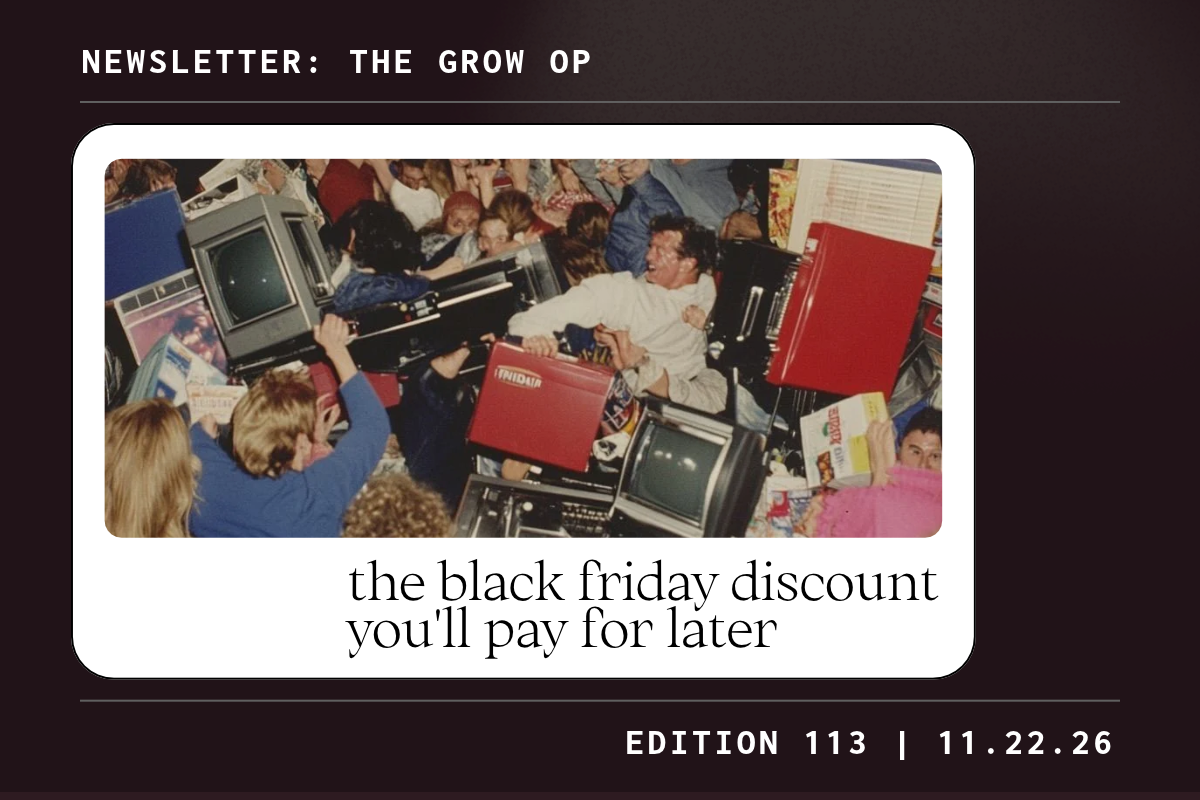
Black Friday is feeling particularly dystopian this year. That seems to be the general consensus, anyway.
No single crisis is to blame this time. Between the exorbitant cost of living, tariff hikes, and bank-outage concerns, shoppers are already on edge.
This alone makes for one helluva marketing challenge. And that’s only half the problem. Marketers are also up against rising CAC, aggressive revenue targets, and shrinking budgets.
This is the gunfight we’re all bringing knives to.
It’s an unforgiving pressure cooker that’s forcing good marketers into some questionable (and bad) habits.
Customers are growing more skeptical of BFCM sales. 46% of customers say that they don’t trust that Black Friday discounts are even real, and 92% claim they aren’t swayed by urgency-driven marketing tactics.
The consequence might be more apparent during Black Friday, but the problem is year-round.
Amazon has become infamous for running fake, deceptive discounts. Other brands like Lululemon and Nike have been caught inflating strikethrough pricing during sales. Earlier this month, Skims went viral for selling a $148 USD advent calendar filled with random junk that you can find at the bottom of almost any woman’s car glove compartment.
While the advent calendar might’ve been a terrible idea that left Skims’ brand credibility hanging by a thread, bad value isn’t illegal. Fictitious discounts, on the other hand, are. The problem is that the FTC is notorious for failing to enforce its own rules that exist to hold brands accountable.

While the consumer data and economic landscape might seem to be pointing toward less overall spending this month, forecasting points toward record-breaking spending. And let’s be real: when that kind of revenue is on the table, it’s going to matter a whole lot more to a leadership team than a stack of reports about rising consumer skepticism.
Is it any surprise that brands are doubling down on desperate, shady, and downright illegal tactics when distrust doesn’t seem to be stopping anyone from converting? Besides, they know they probably won’t be held accountable for any of it anyway.
When you take the revenue-at-all-costs approach, you don’t get to act shocked when there is indeed a cost to abandoning brand credibility.
Those Q4 numbers won’t be looking so hot when January rolls around and you’re processing a mountain of returns and saying goodbye to every churned customer who resents the hell out of you for tricking them. And they will leave.
The bar is now on the floor. Pick it up and win the edge:
The bottom line is that the sales strategies you use now will have a cost later.
The debt you’re willing to take on is yours to decide.
Choose wisely, pals.
Until next time,
Ines
If you found this useful, please be a helpful work friend and send it to a colleague, or share it on Slack. Did a friend forward this newsletter to you? You can subscribe here.
Expert-led workshops on copywriting, SEO and everything in-between. Hands-on seminars to build a career you love. Skills and templates you can put to work right away while connecting with excellent humans. Oh, and sometimes we make scones.

