.png)
Hey,
Most people I know have a complicated relationship with LinkedIn.
It might be one of the corniest spots on the internet, but it’s also helped me connect with some incredible folks and land some great opportunities.
My approach has always been to be in on the joke—I treat LinkedIn like Comic-Con for professionals: a place to cosplay competence as authentically as possible. Works for me.
Being on LinkedIn is exposing. You use your real name and photo, reveal your work history, publicly post and engage, and in exchange you get visibility. It’s an exchange of trust. That trust is what made the platform valuable in the first place.
But lately, three cracks are forming in that trust. And they’re making the platform harder to win on, harder to rely on, and harder to understand.
I’ll unpack what those cracks look like and what marketers should do next.
The first crack: the jobs problem
Can I interest you in a senior copywriting role for an unnamed brand that pays $35,000 a year? How about a paid ads specialist (volunteer on-site)? If so, LinkedIn has some fabulous options for you.

One of LinkedIn’s original promises was opportunity. Today, its job board feels cluttered with stale listings, duplicate roles, evergreen postings, fake jobs, and general nonsense. Then when you finally apply to something legitimate, your application may vanish into the abyss.
If enough people can’t trust a job marketplace, they’re going to apply less seriously or go elsewhere.
What to do about it:
The second crack: the reach problem
Back in 2023, posting on LinkedIn felt simpler. Good content could go viral or effectively grow your network. The same strategies now fall flat.
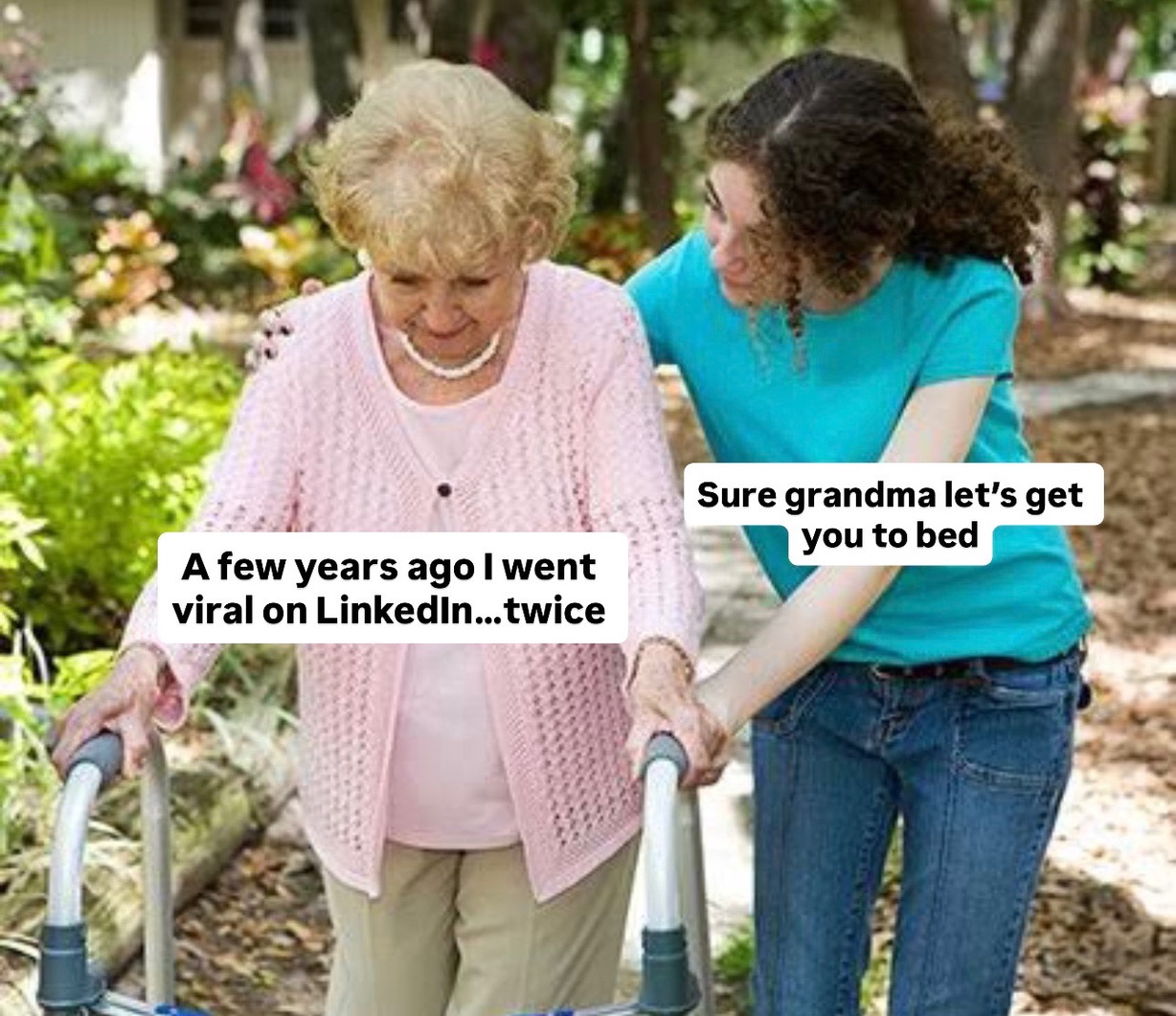
Friend of Growclass Brendan Hufford has framed this shift well: broad distribution appears to be fading, replaced by a more selective, AI-influenced environment that rewards authority, relevance, and consistency. Basically, generic advice is getting taxed.
What he suggests you should do about it:
The third crack: the privacy problem
We already willingly hand over a lot of personal data to LinkedIn. A few weeks ago LinkedIn was accused of conducting extensive browser surveillance without explicit consent, namely browser extension data.
This matters because professional data can be uniquely sensitive. Interests, accessibility tools, job searches, business software usage—these can reveal a lot.
What to do about it:
LinkedIn has changed, and we’re not getting the old version back anytime soon.
Most marketers can’t just delete it. We need it to work. So until a better professional platform comes along, all we can do is adapt our strategy and behaviour.
Thankfully, we’re already pretty good at adapting. It’s kind of our whole thing.
Until next time,
Ines
If you found this useful, please be a helpful work friend and send it to a colleague, or share it on Slack. Did a friend forward this newsletter to you? You can subscribe here.
Expert-led workshops on copywriting, SEO and everything in-between. Hands-on seminars to build a career you love. Skills and templates you can put to work right away while connecting with excellent humans. Oh, and sometimes we make scones.