Hey,
Well, it happened.
This past Tuesday was the annual Google I/O keynote. This was by far their most consequential to date. Over 100 announcements were made, but here’s the shortlist of what you absolutely need to know:
Bad news for nerds (like me) who enjoy manual research. Also bad news for marketing nerds (like us) who don’t want to see our organic traffic numbers plummet even further.
We knew this was coming eventually, but frankly, I’m still spinning from the aftermath of the AI Overviews rollout, so it would’ve been nice to have a few more years to pin the tail on that donkey. Thanks, Google.
And yes, the traffic problem is very real. Over the next while, I expect we’ll see another wave of thought leaders announcing the death of content marketing and SEO for the umpteenth time.
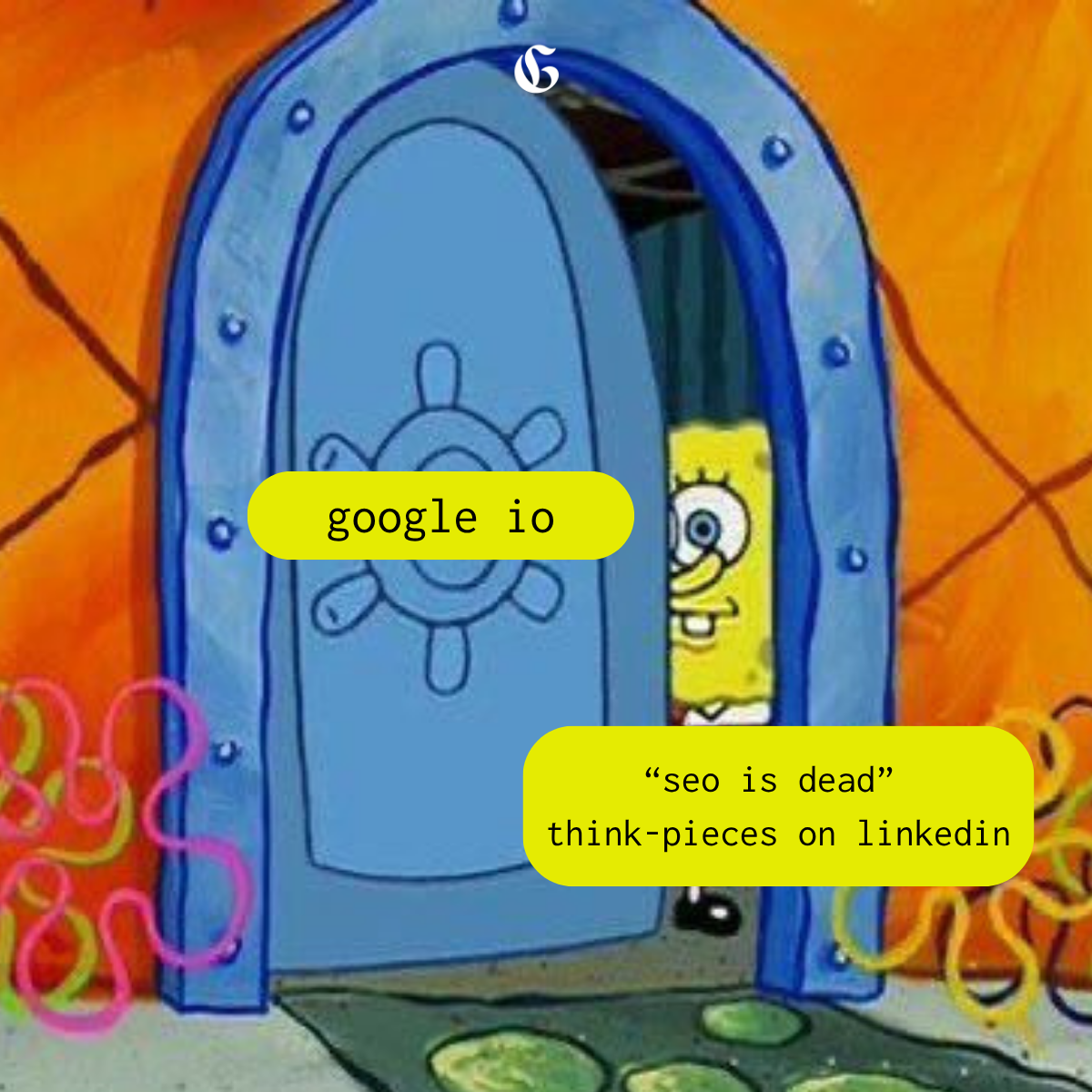
But before you spiral alongside them, I want to let you in on something important: The panic is mostly coming from the folks who were winning the old game.
See, the SEO machine that’s now being dismantled was never a level playing field. It was a content arms race where winning meant having:
Small teams, bootstrapped founders, and the marketers building something from nothing often couldn’t compete.
The brands that built their entire acquisition strategies on organic search were largely the ones who could afford to.
If anyone’s shaking in their boots right now, it’s them.
Let’s get into what’s changing:
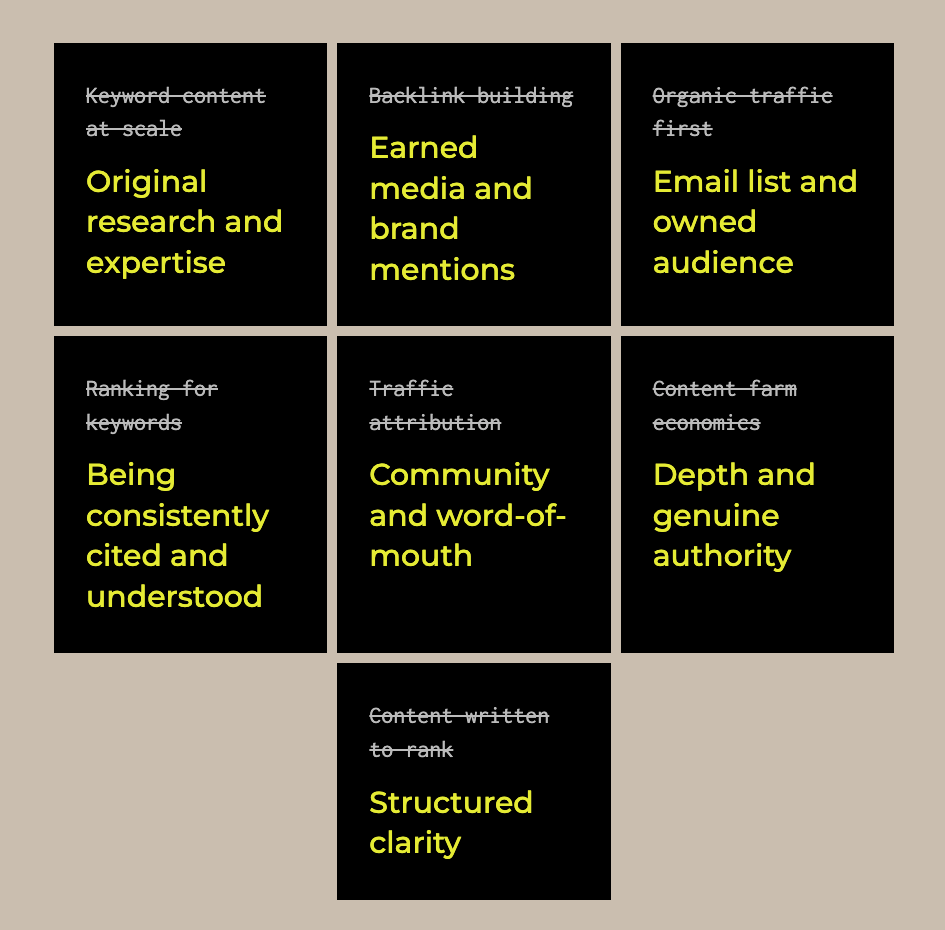
*A caveat: Traditional search isn't going away overnight. Local, ecommerce, transactional, and long-tail queries still return blue links - and Google's ad revenue depends on keeping clicks alive. For many businesses, both of these realities will coexist for years. For a more comprehensive breakdown of what's changing, click here, pal.
For years, growth marketing rewarded visibility, but that’s changing as AI search increasingly rewards credibility.
The question is no longer just whether you can produce enough content to rank. It’s whether your brand is known, trusted, cited, and remembered when AI systems synthesize answers on a user’s behalf.
That’s a harder game in some ways, but also a more honest one because it's asking you to be known, not optimized.
What all of this really means is that a lot of the things smaller brands were told didn’t scale matter a whole lot more now. Your email list, community, original research, and the press mentions that never fit neatly into an attribution model—those things were always credibility, you just couldn't prove it in a dashboard.
And while I think that transition is going to be messy as hell, I also think it creates room for smaller brands, sharper thinkers, and more trusted businesses to finally compete in ways they couldn’t before.
Still.
I’ll miss those blue links.
Until next time,
Ines
If you found this useful, please be a helpful work friend and send it to a colleague, or share it on Slack. Did a friend forward this newsletter to you? You can subscribe here.
Expert-led workshops on copywriting, SEO and everything in-between. Hands-on seminars to build a career you love. Skills and templates you can put to work right away while connecting with excellent humans. Oh, and sometimes we make scones.