Hey,
I hate unwritten rules.
One thing that has all sorts of unwritten rules is networking. Sure, teachers and coaches and shouty business-cult leaders tell you to do it all the time, but no one gives you any clear instructions. So now we're in each other's inboxes bonking into stuff, hoping not to f*ck it up.
If there was a cheat code to making more genuine, authentic professional connections— we should take it, right?
I polled some executive/influencer/founder friends and aggregated unwritten rules for reaching out to busy people. Let's get into it.

Shout out to Amanda Natividad, Alex Shipillo, Adrienne Sheares, and Brendan Hufford who contributed feedback, ideas, and edits to these tips which we will turn into a guide!
1. Be interested, not interesting
My mom is the most popular person I know, and she has one very simple rule about making new friends: be interested, not interesting. When you meet someone for the first time, instead of trying to impress them, get curious. Ask good questions, and listen to the answers. That goes for networking too.
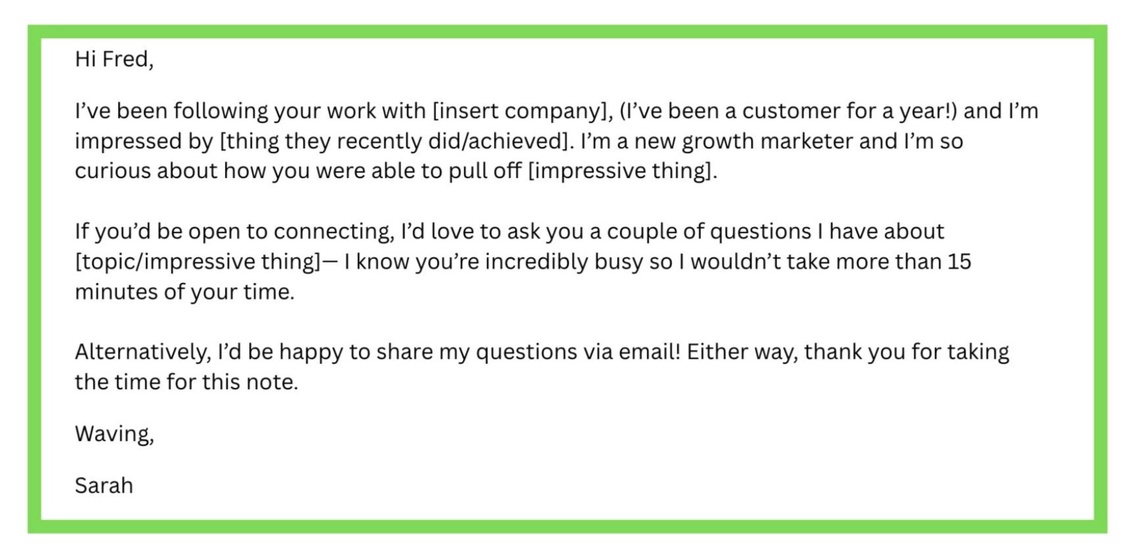
Here’s how you send an interested cold-networking note:
- Be specific. When you reach out, ask for a 15-minute call to ask three questions. Very few busy people want to “just grab coffee” with a stranger.
- Be prepared. Use your email to show that you did your homework and that you're genuinely interested in that person's unique experience.
- Give them an out. They might not want to chat, and that's okay. Offer to send your questions over email instead. Have them prepared in advance, so you can send them quickly if you get the go-ahead.
Here’s an example of what you could send:
2. Make it easy for them
Generally, people want to help. They want to make the intro, go for the coffee, or review your resume— but they’re really really busy. That's why this kind of note is challenging:
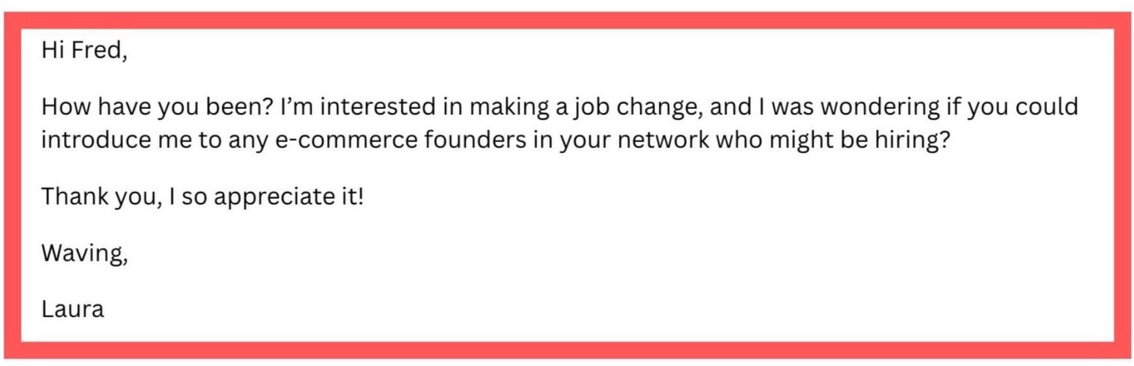
Your contact has to think about their network, look to see if people are hiring, and then write and send the intro. They don’t have time for that.
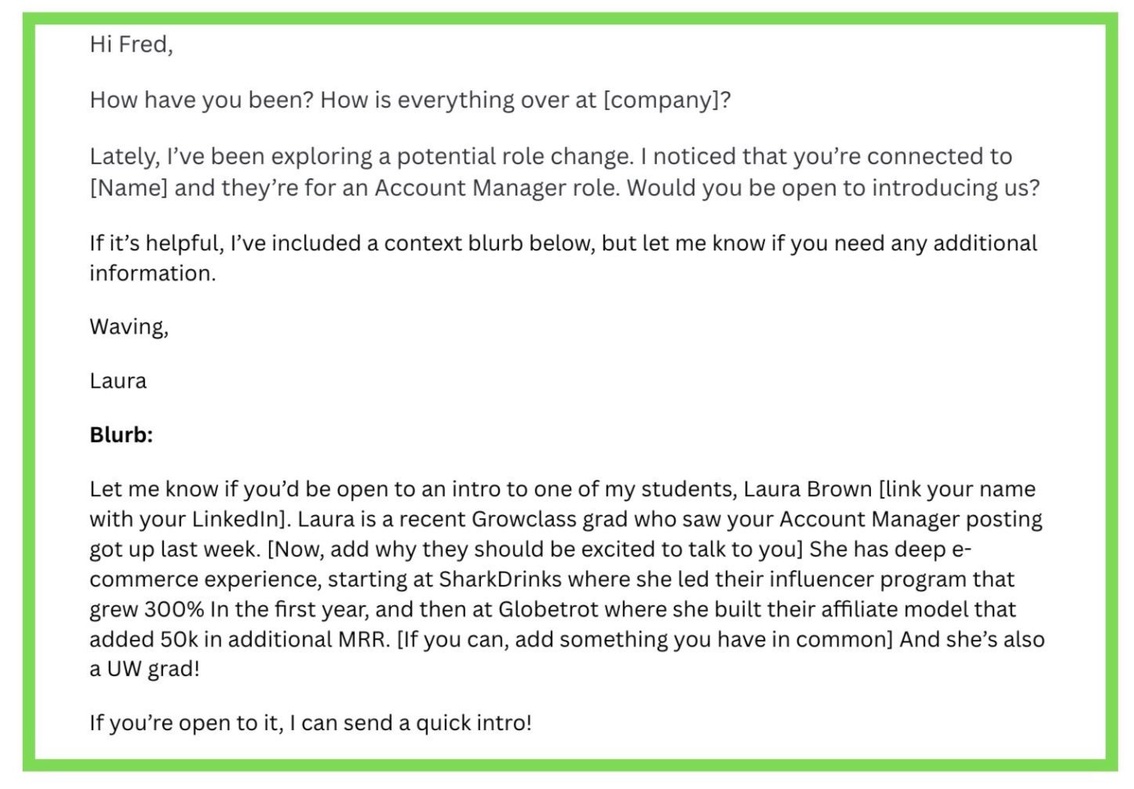
If you’re going to approach a busy person for help, you have to remove any barriers to getting that help. Here's how:
- Have a specific ask. What exactly are you asking them to do?
- Think through the work. What steps will they have to take to help you?
- Do some of that work for them. If you're asking for an intro, write the blurb they need and include it in your ask email.
Now, let’s rewrite that outreach email:
3. Double opt-in or bust
If you’re making an introduction, it’s considerate to make sure everyone is on board before you send the email. If someone asks you to make an intro, simply say: Sure thing! Let me just ping them first to make sure it’s okay. Now, everyone is jazzed to meet!
This is a non-exhaustive list, but we are writing a guide. If you have questions, or things you want to see included, reply to this email and let me know!
If you found this useful, please be a helpful work friend and send it to a colleague, or share it on Slack. Did a friend forward this newsletter to you? You can subscribe here.
Expert-led workshops on copywriting, SEO and everything in-between. Hands-on seminars to build a career you love. Skills and templates you can put to work right away while connecting with excellent humans. Oh, and sometimes we make scones.